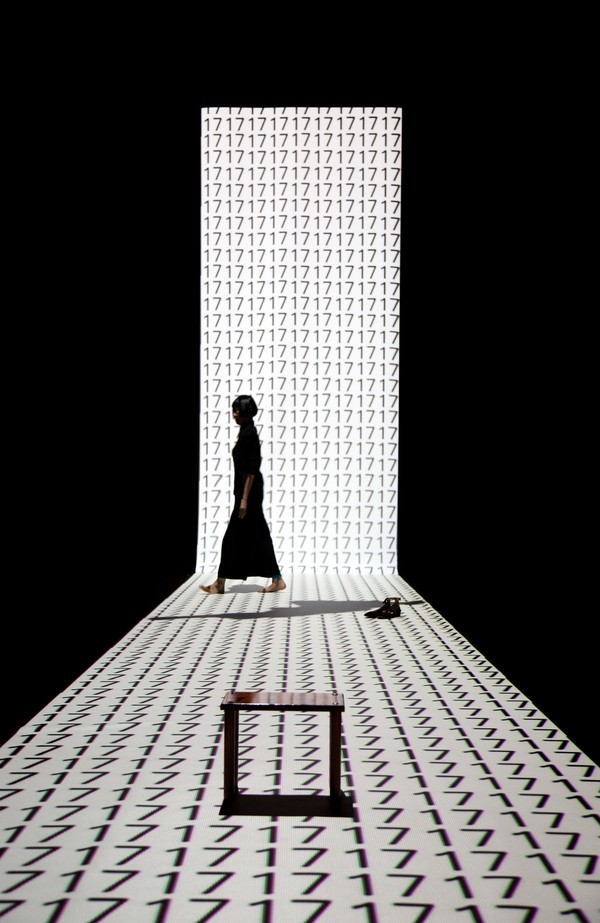
I am I am a sound
Satellite: (n)
1/ an artificial body placed in orbit round the earth or moon or another planet in order to collect information or for communication.
2/ a celestial body orbiting the earth or another planet.
Satellites have a birds-eye view of a planet, or the earth. They fly way above the dust and rocks and other detritus of space. Their vast distance away from the focus of their activity enables them to collect large amounts of data.
Satellites’ orbits shift and change over time, and so their perspectives do too.
I’ve divided up this piece into subheadings: a kind of ur-list, if you will, which embodies the key activities that I identified across the weekend. Some of the subheadings are made up words. I have done this on purpose.
GATHERATION
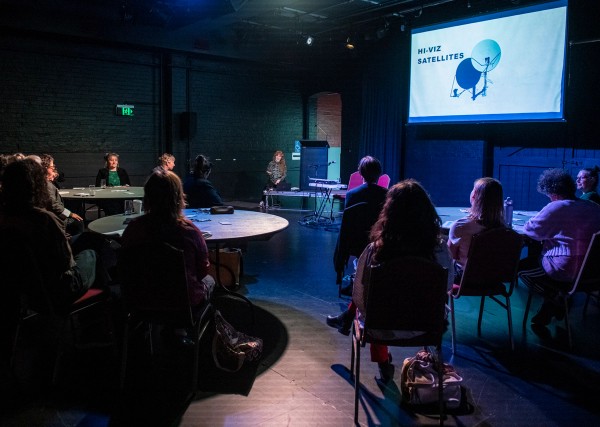
Each year since 2018, Hi Viz has been a gathering place for women and non-binary artists working across performance, sound and music. An initiative of independent performance company Chamber Made, this year marked Hi Viz’s first foray into a satellite event, which was created in conjunction with regional arts organisation Punctum and Singaporean interdisciplinary arts collective SAtheCollective. Across 2 days in November 2022, attendees were dispersed between Singapore, Bendigo, and digital spaces, with remote, face-to-face, and online opportunities to connect.
I was excited to attend. Alongside many others, I’ve felt a shifting in momentum in my practice across the pandemic years [that seems like such a dystopic sentence], and with the 2022 Hi Viz event offering a real focus on making, it felt like the perfect time to be with others.
The event was structured around a breadth of interchanges and exchanges: artist talks and presentations, sharing of practice/s, workshops, and lots of opportunities to talk and network. I travelled from Melbourne to Bendigo to take part, and although it was a relatively small group of artists at the Engine Room, the experience was spacious, generous and affirming. Much of the work was around practice - articulating it, claiming it, disrupting it, maintaining it, sustaining it. As I listened, wrote, drew, experimented, talked and ate, I felt myself unwind a little.
In Bendigo, the event opened with a Welcome To Country from First Nations artist Bec Phillips, who spoke and sang to us of the listening into the in-between spaces in the Dja Dja Warrung tradition. This notion resonated throughout the two days in a multitude of ways: as a strategy for practice, as a metaphor for interdisciplinarity, as a way of regarding the world, as a process for communication, and as a subtle subversion of neo-liberal modes of production.
ACTIVATION
Day 1 included artist presentations across Singapore and Bendigo, with Q and A sessions and chat/discussions prompted from the online attendees.
Adena Jacobs described her artistic process of dismantling, unmaking and undoing. She is curious about the ways in which sound and audio might generate affect, sensation and feeling in her mostly wordless works. I was struck by her comments about the value of introspection, particular as a provocation for thinking about audience experiences and meaning-making. Introspection is not often considered in the context of performance-making. We are so often expected to be outward-facing, engaging, entertaining. It is exhausting. Or perhaps that’s just me.
We then prepared to tune in to Singapore and, in a deeply ironic moment, the sound to the Singapore cohort did not connect in our first attempt to make contact. We in Bendigo watched as the participants in Singapore animatedly chatted away to us with no sound. The technicians were doing their utmost to troubleshoot the situation. The online Auslan interpreter explained to us what was happening, but there was no one in the room who spoke Auslan. So, for a while, we all stopped.
CONTEMPLATION
I found myself feeling strangely relaxed and silent in these moments of waiting. There we were, ten or twelve bodies in a quiet dark room, listening for other bodies to make noise in other quiet dark rooms. We were together but apart, displaced but with a common goal, distant, but connected. I wondered about proximity, distance, resonance, reverberation, signals, vibrations and antennas, but also the space between; the leftovers, the ignored spaces, the things that get left behind.
CONNECTIVISATION
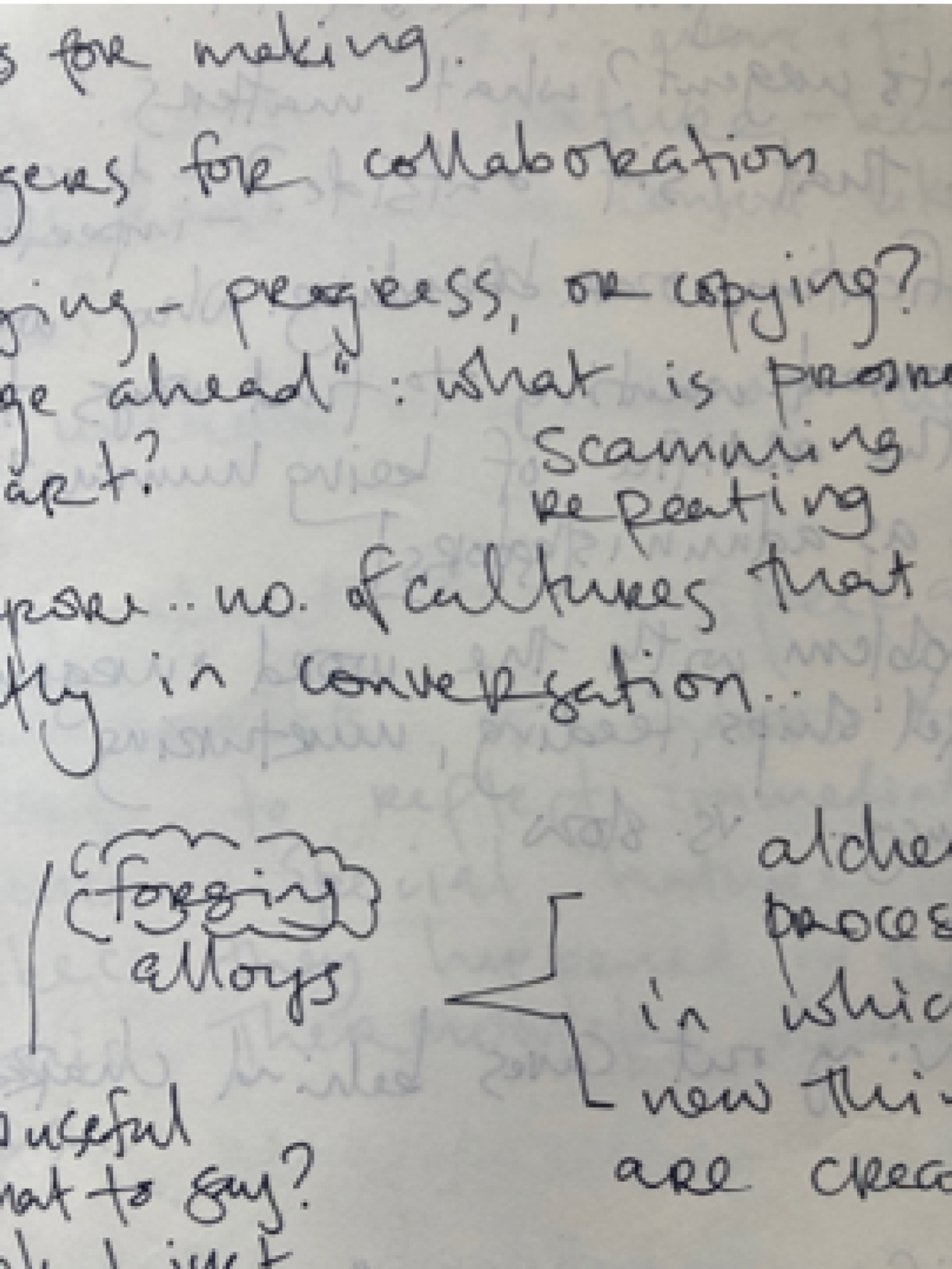
After a time, contact was re-established, and a dynamic afternoon of activities followed. The remarkable Zen Teh spoke to presence and absence in her most recent work ‘A Familiar Forest’, in which nature sounds were electronically generated to create a dense and immersive installation in the heart of urban Singapore. Lz Dunn led the Bendigo cohort in a sublimely squishy workshop activity [playdough was involved] in order to bring our attention to the feet. Back in Singapore, economist Sharon Chang facilitated a discussion about triggers for making, and an unfolding of the notion of ‘forging’ as a provocation for thinking about progress ... or process.
ACCOMMODATION
I stayed the night in an oldy-fashionedy motel: brown brick and off the main drag but with all the tiny things that I love: a miniature bottle of real milk; a very small square soap in a box. The man at the reception desk was friendly and covered in grass clippings. My listening has changed over the years of investigating sound work: I listen to the world differently, and I am sensitive to loud sounds. Before I went to bed I took a late-night walk through the town of Bendigo, which I had last visited as a small child. It was very warm, and the dark sky was full of bats. Their wings and squeaks were soft and sharp as I looked up through cathedral spires. I felt quiet. In the morning, I was woken early by the hustle and bustle of motel departures. People seemed to load their cars and slam the door each time they put something in it, only to reopen it and slam it again minutes later. I wondered if this was a metaphor for life.
PARTICIPATION
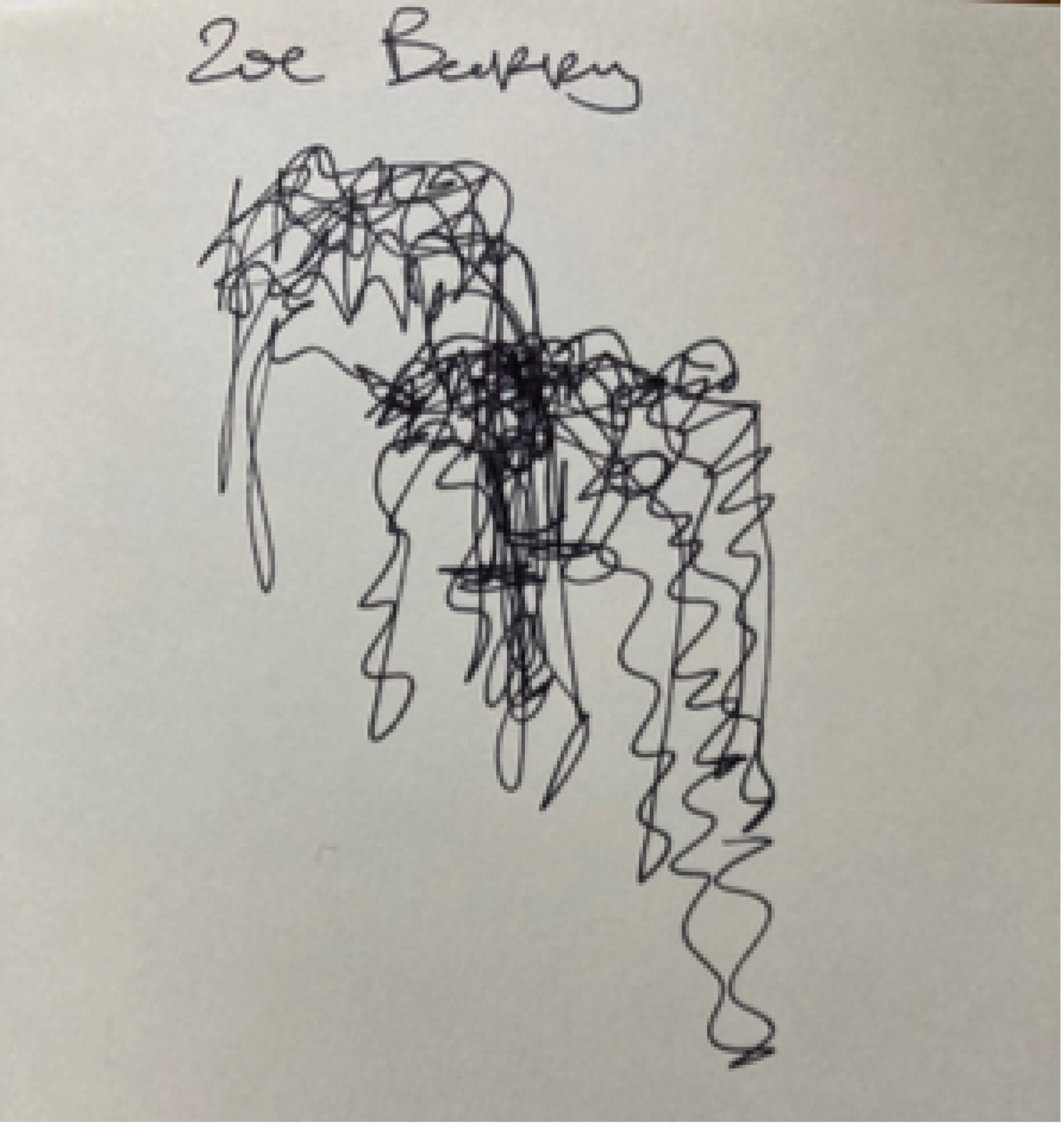
Day 2 was less of a hybrid and digital exchange, and more of a hands-on day of workshops. Composer Zoë Barry began with an activity which was inspired by her current Orange House By The Sea residency. We became willing participants in a series of audience experiments which instrumentalised her investigation into the ways in which voices might be ‘moved’. Zoë’s work, in which sounds and voices are distilled through the body in different ways, resonated strongly with me. Our contribution to the experiment, in which attention to slowness and repetition is a key consideration, was a participatory audience exercise which built over an extended time and which led the voice gently through our bodies to hers. The process of repetition and unison speaking brought a musical consideration to the task. I was not concerned with meaning-making; just focussed on the activity of repeating the spoken phrase I was listening to. Yet something happened in this process that was deeply connecting, even as each of us was just trying to do the thing. Zoe’s voice, her glorious cello sitting underneath, and our shared experience of speaking together, was a moment of sublime togetherness that was artful and profoundly moving.
DISTILLATION
In the afternoon the workshops continued. Often there was some kind of process that was about disruption, distillation, and mediation: ways to begin practice, or speak about it. Vocalist Tina Stefanou’s workshop was focussed on us. Prefaced by Tina sing-reading a text, we described our practices to each other with eyes closed, listening to and for the musicality inherent in each artist’s vocal delivery. We repeated this process again, refining and removing extraneous material or information, to condense our descriptions into shorter versions. In the final workshop of the day, Amaara Raheem facilitated the creation of an archive which was of us and by us and for us. Across iterative processes of writing, moving, singing, looking, listing and de-making, we composed an embodied document which contained the essence of the two days we had together. It was just so pleasurable to do, to make, and not to justify or deliver.
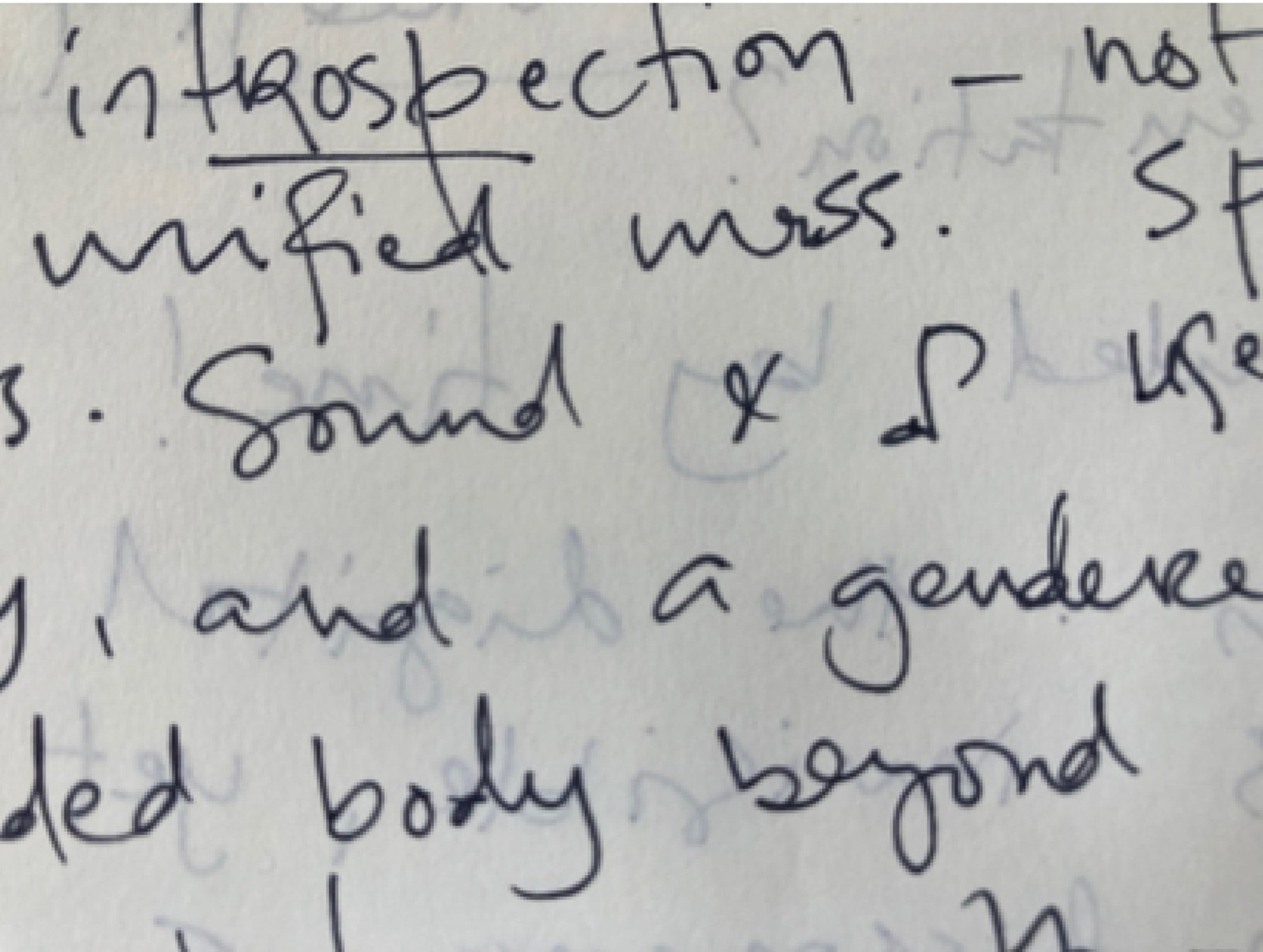
LISTIFICATION, TRANSFORMATION, CONCATENATION, RUMINATION
The conversations, both facilitated and informal, were constant and lively, and ranged from pedestrian to epic and back again. Topics included: making work in contested spaces, audiences, failure, process not outcome, ageing, nature, circumstance, mammals, the unspeakable, methods of dismantling and slowness, doubt, rage, excitement, curiosity, and articulation. I discerned subtle generational differences. Some older women [including me] were re-thinking their approaches as ways to subvert or revolt and were keen to shift form and/or fold new practices into existing forms. The younger cohort discussed current barriers to participation, among other things. This opened up vibrant and generous discussions about our understandings of what ‘making’ might be or become. Can it encompass curating and supporting and disrupting as well as doing and creating? Can we work into the in-between space more readily?
CONCLUSIONATION
As I drove home, I kept thinking about all the things I COULD have done as a sound artist while I was at Hi Viz – record cool sounds like the drive in the car with Moby’s ‘Long Ambients’ on the stereo, or the industrial buzz of the motel fridge, or the bats, or the rain, or do vox pops with pithy comments. Yeah. I didn’t do any of that. Instead, I thought about my practice, and the people I met, and the things we did. We were satellites moving in and out of each other’s orbits, tuning in, resonating, gently bumping up against each other and ourselves.